



Date: Summer 2025 Venue: Hong Kong…
Best Time management Apps for A Level and GCSE revision
When you’re revising for A-Levels or GCSEs, managing your time effectively is everything. It’s not just about studying longer; it’s about studying smarter. Let’s be honest — distractions are everywhere. Between Threads, group chats, and YouTube “study breaks,” it’s easy to lose an hour (or three). And thankfully, there are some amazing apps out there that can help you stay focused, track your progress, and make your study sessions far more efficient.
Time management apps help you stay disciplined, monitor how long you actually study, and keep your breaks structured. Think of these apps as your digital accountability partners — always reminding you to stay on task without being too strict or stressful. Here’s a full list to the best time management apps for students — tested and loved by thousands of UK students who’ve used them to boost productivity and beat procrastination.
Time Management Apps
Forest: Stay Focused and Grow Trees
Forest is one of the most popular productivity apps among students, and for good reason. The idea is simple yet powerful — every time you want to focus, you plant a virtual tree. If you leave the app (say, to check Instagram), the tree dies.
Over time, you grow your own digital forest — a visual representation of your study efforts.
Best Features
- Encourages deep focus using gamification.
- You can customise session lengths (e.g., 25 minutes, 45 minutes).
- Sync progress with friends — compete for who plants the most trees!
- Every focused session adds to your “forest,” giving a satisfying sense of progress.
Perfect For
- Students who constantly check their phones.
- Visual learners who love seeing progress.
- Anyone who needs a bit of motivation to stay off social media.
Available On
- iOS (Click here to download)
- Android (Click here to download)
- Chrome extension for desktop focus sessions

Flat Tomato: The Pomodoro Companion
Based on the Pomodoro Technique, Flat Tomato helps you structure your study sessions by alternating between focused work and short breaks. It’s all about balance — 25 minutes of focus, followed by a 5-minute rest. After four rounds, you get a longer break.
It’s simple, elegant, and backed by science.
Best Features
- Built-in Pomodoro timer with flexible settings.
- Keeps a history log of your focus sessions.
- Option to record distractions — great for spotting patterns (e.g., “kept checking messages”).
- Sleek, minimalist design that’s easy to use.
Perfect For
- Students who need structure but not pressure.
- Those who get easily distracted but want to track progress.
- Perfect for revision blocks or essay writing.
Available On
- iOS only (Click here to download)


Reagent Academy UK Academic Tip:
Time Management Apps like Flat Tomato boost productivity during GCSE and A-Level revision, yet many students need more than timed sessions to achieve high marks—proven exam techniques make the difference.
Master question breakdown, exam timing, high-scoring answers, and active recall through our GCSE and A-Level 1-to-1 tutoring or group classes. Get personalised guidance, past paper exercise, and confidence support to complement your study routine.
Focus To-Do: All-in-One Pomodoro + Task Tracker
If you like the Pomodoro method but also want a full task management system, Focus To-Do is your go-to app. It lets you plan your tasks, track deadlines, and use Pomodoro timers all in one place.
Best Features
- Combines to-do lists and timers in one app.
- Visual progress charts and daily focus reports.
- Can sync across devices — great for switching between phone and laptop.
- Option to set goals for each subject (e.g., “3 Pomodoros for Maths”).
Perfect For
- Students who want structure and data tracking.
- A-Level students juggling multiple subjects.
- Anyone who enjoys seeing measurable progress.
Reagent Academy UK Academic Tip:
Top grades in GCSE and A-Level exams demand more than consistent study habits and focus during revision—they require mastering key exam techniques, including question analysis, effective time management in papers, structured answers, and active recall.
Build these vital skills through our expert GCSE and A-Level 1-to-1 tutorials and small group classes. Our personalised sessions deliver subject-specific strategies, intensive past paper practice, and confidence-building support to help you achieve your best results.
TickTick: Task Manager with Built-In Pomodoro
TickTick combines a task manager, habit tracker, and Pomodoro timer all in one neat app. It’s great for students who want to plan their revision schedule and build better study habits at the same time.
Best Features
- Built-in Pomodoro timer with automatic task tracking.
- Customisable habit tracker (perfect for daily revision).
- Smart reminders for deadlines and exam dates.
- Syncs across multiple devices.
Perfect For
- Students who love structure but want flexibility.
- A-Level or GCSE students managing multiple coursework deadlines.
- Anyone aiming to form consistent study habits before exams.
Time Management Global Leaderboard
Reagent academy Pomodoro Planner
The Pomodoro Technique is a proven time management method that helps students like you maximise productivity, reduce burnout, and achieve top grades. At Reagent Academy UK, we’ve created a specialised Pomodoro Planner tailored specifically for GCSE and A-Level students – designed to fit seamlessly into your revision routine for subjects like Maths, Sciences, English, and more.
If you prefer a tangible, printable version to track your sessions by hand, you can easily download our free physical Pomodoro Planner PDF.
Alternatively, access our interactive online Pomodoro Planner, built especially for GCSE and A-Level students, to plan your study timers digitally and stay on track from anywhere.

Best Features
- Tangible, Easy to download
- Free
- Join our online global leaderboard for GCSE and A Level students respectively
Perfect For
- GCSE and A-Level students preparing for exams in Maths, Sciences, English, Humanities, Languages, and more.
- Students who struggle with procrastination or maintaining focus during long revision sessions.
- Anyone aiming for top grades by adopting a proven, evidence-based time management technique that reduces burnout and boosts retention.
You can get it here
- Physical Copy
- GCSE Online Pomodoro Planner
- A Level Online Pomodoro Planner
How to Choose the Right App for You
| If you want to… | Try this |
|---|---|
| Stay off your phone | Forest |
| Track focus sessions | Flat Tomato |
| Combine tasks + timers | Focus To-Do |
| Compete with other students | Reagent Academy Pomodoro Planner |
| Build habits & track goals | TickTick |
You don’t need all of them — pick one or two that fit your study style. The goal is to make your time visible, measurable, and productive.
You may be interested in…

The Pomodoro Technique: Effective Time Management Strategies for UK GCSE and A-Level Exams
In the world of GCSE and A-Level exams, effective time management can make all the difference between feeling overwhelmed and staying in control. With intense revision schedules, multiple subjects, and the constant battle against procrastination, many students struggle to maintain focus and productivity. That’s where the Pomodoro Technique comes in—a simple yet powerful time management method that’s helped countless students boost their revision efficiency.
Developed in the late 1980s by Francesco Cirillo, the Pomodoro Technique (named after the tomato-shaped kitchen timer he used) breaks study time into manageable intervals. It’s particularly suited for GCSE and A-Level students preparing for exams, as it combats burnout, improves concentration, and makes long revision sessions more achievable.

What Is the Pomodoro Technique?
The core idea is straightforward: work in focused bursts followed by short breaks. Each “Pomodoro” is a 25-minute study session, followed by a 5-minute break. After completing four Pomodoros, take a longer break of 15–30 minutes.
This structure helps prevent mental fatigue, as regular breaks allow your brain to rest and process information. For UK students juggling GCSE subjects like Maths, Science, and English, or A-Level topics requiring deep analysis, Pomodoro turns daunting revision marathons into bite-sized, productive chunks.
Why the Pomodoro Technique Works for GCSE and A-Level Students?
GCSE and A-Level exams demand sustained focus over weeks or months, but endless studying often leads to diminishing returns. Here’s why Pomodoro is a game-changer:
- Boosts Focus and Reduces Procrastination: Knowing you only need to concentrate for 25 minutes makes starting easier. It trains your brain to resist distractions like social media or phone notifications.
- Prevents Burnout and Exam Stress: Short breaks recharge your mind, reducing the fatigue common during intense revision periods. Studies show structured breaks improve concentration and motivation compared to unstructured studying.
- Improves Productivity and Retention: Breaking tasks into intervals creates more “beginnings and ends” to sessions, enhancing memory retention through spaced repetition—a proven technique for exam success.
- Tailored for High-Stakes Exams: Whether revising GCSE past papers or A-Level coursework, Pomodoro helps you tackle specific tasks (e.g., “Revise Biology photosynthesis in one Pomodoro”) without feeling overwhelmed.
Many of our students report higher productivity and lower stress levels, especially when combining it with other study tips. While the Pomodoro Technique and your very own planner are excellent for independent revision, personalised guidance can take your results to the next level. Our GCSE tutorials help students build a strong foundation for further academic studies, ensuring you’re well-prepared beyond exams.
For A-Level students, our A-Level tutorials combined with expert UK University Admission support—including personalised help with personal statements and interview tips—can significantly increase your chances of getting into your dream university and subject.

How to Use the Pomodoro Technique for GCSE and A-Level Revision?
Getting started is easy—no fancy tools required, though apps like Focus Booster or a simple phone timer work great.
- Plan Your Tasks: Before starting, list specific revision goals (e.g., “Complete 10 Maths GCSE questions” or “Memorise A-Level History dates”).
- Set the Timer for 25 Minutes: Focus solely on one task. No multitasking or distractions—silence your phone!
- Work Until the Timer Rings: Push through with full concentration.
- Take a 5-Minute Break: Stand up, stretch, grab water, or step away from your desk. Avoid screens to truly rest your brain.
- Repeat: After four Pomodoros, take a longer 15–30 minute break for a walk or snack.
- Track Your Progress: Mark each completed Pomodoro with a tick. This builds a sense of accomplishment.
Pro Tips for our students:
- Adjust intervals if needed: Try 20 minutes for tougher subjects or 40 minutes if you’re in the flow.
- Use breaks wisely: Light exercise or deep breathing can combat exam stress.
- Combine with exam boards’ resources: Dedicate Pomodoros to OCR, AQA, or Edexcel past papers.
- Experiment during mock exams to find your ideal rhythm.
Supercharge Your Pomodoro Sessions with a Free Planner
To make the Pomodoro Technique even more effective, pair it with a dedicated planner tailored for GCSE and A-Level revision. A good planner helps you track your Pomodoros, set daily goals goals, and organise subjects across your exam timetable.
Claim Your Free downloadable GCSE/A-Level Planner Today!
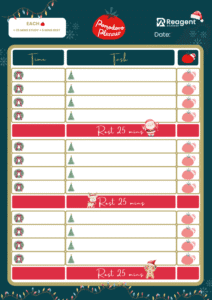
This exclusive resource is designed specifically for UK students to maximise productivity and stay on top of revision.
If you’re up for competing with A Level students from around the world, try our online Pomodoro planner – it features a global leaderboard!
The Pomodoro Technique isn’t just a study hack—it’s a proven strategy for effective time management during UK GCSE and A-Level preparation.
At Reagent Academy UK, we’ve seen students transform their GCSE and A-Level results by adopting Pomodoro alongside our personalised tutoring and tools like our free planner or other time management apps available. It promotes sustainable studying, helping you avoid last-minute cramming. By working smarter with focused intervals and restorative breaks, you’ll enhance productivity, reduce stress, and retain more information for exam day.
Ready to try it? Start with one Pomodoro today, grab your free planner, and build from there. If you’re seeking extra support for GCSE or A-Level revision, contact our professional team for a free consultation personalised to help you succeed.
You may be interested in…
2025 | Clinical Shadowing Experience: Veterinary Practice
Date: Summer 2025 Venue: Hong Kong…

2025 | Featured Speaker at IDP GO Overseas Education Fair 【Expert Insights on Preparing for Medical School】
Date: July 2025 Venue: The 7th & 8th Floors, Cordis Hotel, Hong Kong…

2025 | School Visits: Meeting our students at Roedean, Brighton College & Bede’s School
Date: March 2025 Venue: Roedean School, Brighton College & Bede’s School…


2025 | School Visit: Culford School
Date: March 2025 Venue: Culford School…
How to Choose Your A Level Subjects for UK University Entry?
Choosing your A Level subjects is one of the most important steps in your UK education. The subjects you select — whether it’s Mathematics, Biology, or Psychology — will influence your UK university options, career pathways (especially for specialist subjects like law and medicine), and your overall academic development.
At Reagent Academy UK, our tutors have been through the same UK education path as you. In this guide, we share expert insights and proven strategies to help you choose the right A Level subjects with clarity and confidence — whether your ambitions are in Medicine, Law, Engineering, or Architecture. If you have any questions, WhatsApp our admin team for expert guidance on UK academic choices.
1. How A Level Subjects Impact UK University Admissions
1.1 Check the Required A Level Subjects for Specific University Courses
According to GOV.UK, over 814,335 2025 A Level results were issued across England. The most popular subjects were Mathematics, Psychology, and Biology. Nationally, 28.2% of entries achieved grades A or A*, while 9.4% reached the top A* grade. Competition for top UK university placements continues to rise year-on-year. Different UK university degrees have specific A Level subject requirements — particularly competitive programmes like Medicine, Law, and Economics. Not meeting these requirements can limit your future course options.
Examples of University Courses that required specific A Level Subjects:
- Medicine, Dentistry, Pharmacy: Chemistry and Biology are often mandatory, while Biology, Physics or Maths are often preferred.
- Engineering, Computer Science: Mathematics is often mandatory or preferred; Further Maths or Physics provides an advantage.
- Law, English, History, or Literature: At least one Essay-based subject is typically preferred.
Reagent Academy UK Academic Tip:
Always double-check the latest entry requirements on the UCAS website or university course pages. Some UK universities require interviews or extra admissions tests — especially for specialised subjects like medicine and law.
At Reagent Academy UK, we offer coaching for these processes, including exam preparation, personal statement writing, and interview training with tutors who have successfully completed the same journey.
1.2 Consider Choosing Facilitating A Level Subjects: Keep Your Options Open
Facilitating subjects are widely accepted across UK universities and are ideal if you’re unsure of your future course. Choosing two or more of these subjects gives you greater flexibility and academic credibility.
- Mathematics
- English Language or Literature or other Languages
- Biology, Chemistry, Physics
- History
- Geography
Selecting a mix of these subjects helps keep pathways open for Russell Group universities. If you’re exploring different UK degree options, feel free to WhatsApp our team for professional suggestions tailored to your academic strengths.

1.3 Be Cautious with Less Effective Subjects
When choosing your A Level subjects, it’s important to know that some universities view particular subjects as less effective preparation for higher education. This usually happens when a subject is seen as too far removed from the academic rigour or analytical skills required for degree-level study.
For example, the London School of Economics (LSE) publishes an official list of “non-preferred A Level subjects”, including popular subjects like Business Studies, Design and Technology, Media Studies.
What This Means for You
- One non-preferred subject is typically fine if your other A Levels are academically strong and relevant.
- Avoid taking two or more “soft” subjects together, especially if they don’t directly support your degree ambitions.
- Creative A Levels (such as Art, Media, or Design) still have value – particularly if you plan to study a related subject. Just make sure your remaining A Levels demonstrate analytical and academic depth.
Reagent Academy UK Academic Tip:
Don’t let the term “non-preferred” discourage you from studying a subject you’re passionate about. The key is balance. Combine creative or vocational A Levels with facilitating subjects such as Mathematics, Science, or Economics that reflect academic rigour and strengthen your university application.
By researching early and understanding how universities assess different A Levels, you’ll be able to make informed, strategic decisions that enhance both your university applications and your future career opportunities.
1.4 Prioritise Subjects You Enjoy and Excel In
Choosing A Level subjects you genuinely enjoy will naturally motivate you to perform well. You’re more likely to stay motivated and achieve better results when you study something that interests you.
A Levels are more challenging than GCSEs — the content is deeper, and expectations are higher. If you already enjoy and perform well in a subject at GCSE, it’s a good sign it could be the right A Level choice for you.
Think about the subjects that made you excited to learn or proud of your progress. These are strong clues to where your strengths and passions lie. With Reagent Academy UK’s expert tutors and a personalised approach, it’s easier to succeed in subjects you truly love.
2. The Transition from GCSE to A Level: What to Expect
The jump from GCSE to A Level (or from iGCSE to iA Level if you are not based in the UK) can be challenging. GCSEs test a broad understanding, while A Levels demand depth, independent research, and analytical skills. If you found certain subjects difficult at GCSE level, additional A Level tutorials may be helpful.
Expect to manage your own study time, complete in-depth essays, and revise consistently. The workload between GCSE and A Level grows exponentially — many students underestimate this shift.
Reagent Academy UK Academic Tip:
Teachers and senior students in your own school can offer real insight into workload, teaching style, and assessment difficulty. Their experiences will help you identify whether you’ll thrive in a particular subject. Reagent Academy tutors can also provide personalised advice based on your profile.
Free platforms like BBC Bitesize, OpenLearn, and YouTube offer excellent introductions to each course.
3. How to Combine Your A Level Subjects Strategically
3.1 Choose Complementary A Level Subjects
When selecting your A Level subjects, aim for logical combinations that reinforce one another academically. Universities value coherence in your academic direction.
- Engineering Pathway: Maths, Physics, Computer Science
- Healthcare Pathway: Biology, Chemistry, Maths
- Humanities Pathway: History, Politics, Geography
Balanced subject combinations demonstrate intellectual range and enhance your UK university application.

3.2 Avoid Taking Too Many New Subjects in A Level
Completely new subjects in A Levels can be risky if you’re unfamiliar with the material. Consider taking only one new subject, unless you have strong support from A Level tutorials or trial lessons. Start pre-learning the contents can help you evaluate interest and difficulty before committing.
4. Myths About Choosing A Level Subjects
Myth #1: “Some A Level subjects are banned by universities.”
No UK university outright “bans” specific A Level subjects. However, each university — and even each course within a university — sets its own entry requirements. Some subjects are simply not counted towards entry if they don’t demonstrate the skills needed for that degree.
What you should do:
- Always verify entry requirements on UCAS or the official university website.
- Contact admissions offices directly if you are unsure about your subject mix.
- Combine your creative subjects (like Art) with more traditional ones (like Maths) to balance creativity with academic rigour.
Reagent Academy UK Tip:
If you’re unsure whether your A Level subjects fit your chosen degree, our experienced team can review your course combinations and provide personalised advice tailored to your UK university goals.
Myth #2: “Someone I know got rejected because of their A Level subjects — so I shouldn’t take them.”
Every university application is unique. A rejection is rarely based on A Level subjects alone. Admissions decisions also consider your predicted grades, personal statement, references, and relevant work experience.
Just because one student was unsuccessful with a particular subject combination doesn’t mean you will be. In fact, many successful applicants gain offers with varied or unconventional A Level subjects — provided they demonstrate strong academic performance and genuine interest in their chosen field.
What you should do:
- Focus on achieving high grades in the subjects you enjoy and perform well in.
- Build a compelling personal statement showing how your subjects connect to your career goals.
Reagent Academy UK Tip:
Our tutors have helped students gain entry into top UK universities by helping them strengthen other parts of their UCAS profile and personal statement.
Myth #3: “Universities only accept traditional A Level subjects.”
While traditional or facilitating subjects like Maths, and Sciences are highly valued, most UK universities appreciate a balanced subject mix that reflects both your academic strengths and personal interests. Some degrees — such as Architecture, Design, or Performing Arts — actively seek creative portfolios, meaning creative A Levels can actually enhance your application.
What you should do:
- Research your chosen degree’s specific subject preferences before deciding.
- Choose at least one or two facilitating subjects to keep your options open.
- Choose creative A Levels strategically if they support your intended degree.
Reagent Academy UK Tip:
Our UK-based A Level tutorials and consultations can help you understand how to position your subject choices to appeal to both academic and creative degree pathways. Book a free consultation today.
5. You Don’t Need to Know Your Career Yet — Choose Smartly
At 16 or 17, it’s perfectly normal not to have a defined career path. The key is to choose A Level subjects that keep your options open. Talk to Reagent Academy UK advisors for guidance.
- Research degree programmes and note required subjects.
- Choose subjects that connect to multiple career paths.
Courses like Business, Law, Management, and Social Sciences are flexible and accept a wide range of A Level subject combinations.
Mastering Your 2026 A Level Choices
Choosing the right A Level subjects is a decisive step towards your UK university goals. With 2025 A Level results showing increased competition and higher grade boundaries, careful planning is crucial. Combine passion with practicality, use trusted A Level tutorials, and seek professional advice when needed.
With strategic preparation and curiosity, you’ll set yourself up not only for academic excellence but also for a fulfilling university and career journey in the UK.
You may be interested in…
Best Time management Apps for A Level and GCSE revision
Best Time management Apps for A Level and GCSE revisionWhen you’re revising for A-Levels or GCSEs, managing your time effectively…

The Pomodoro Technique: Effective Time Management Strategies for UK GCSE and A-Level Exams
The Pomodoro Technique: Effective Time Management Strategies for UK GCSE and A-Level ExamsIn the world of GCSE and A-Level exams,…